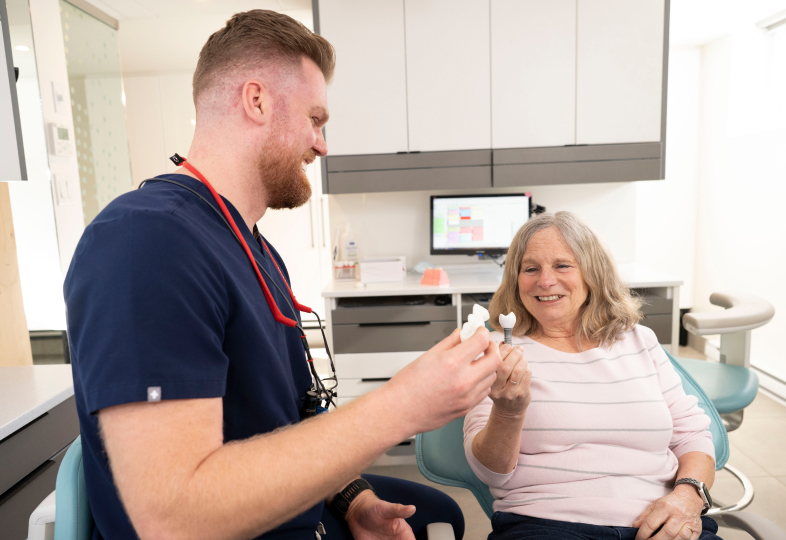
Dental implants
Restore your missing teeth naturally and permanently with dental implants. This long-lasting, aesthetic solution helps you chew comfortably, maintain your oral health, and regain a complete, confident smile.
What Is a dental implant?
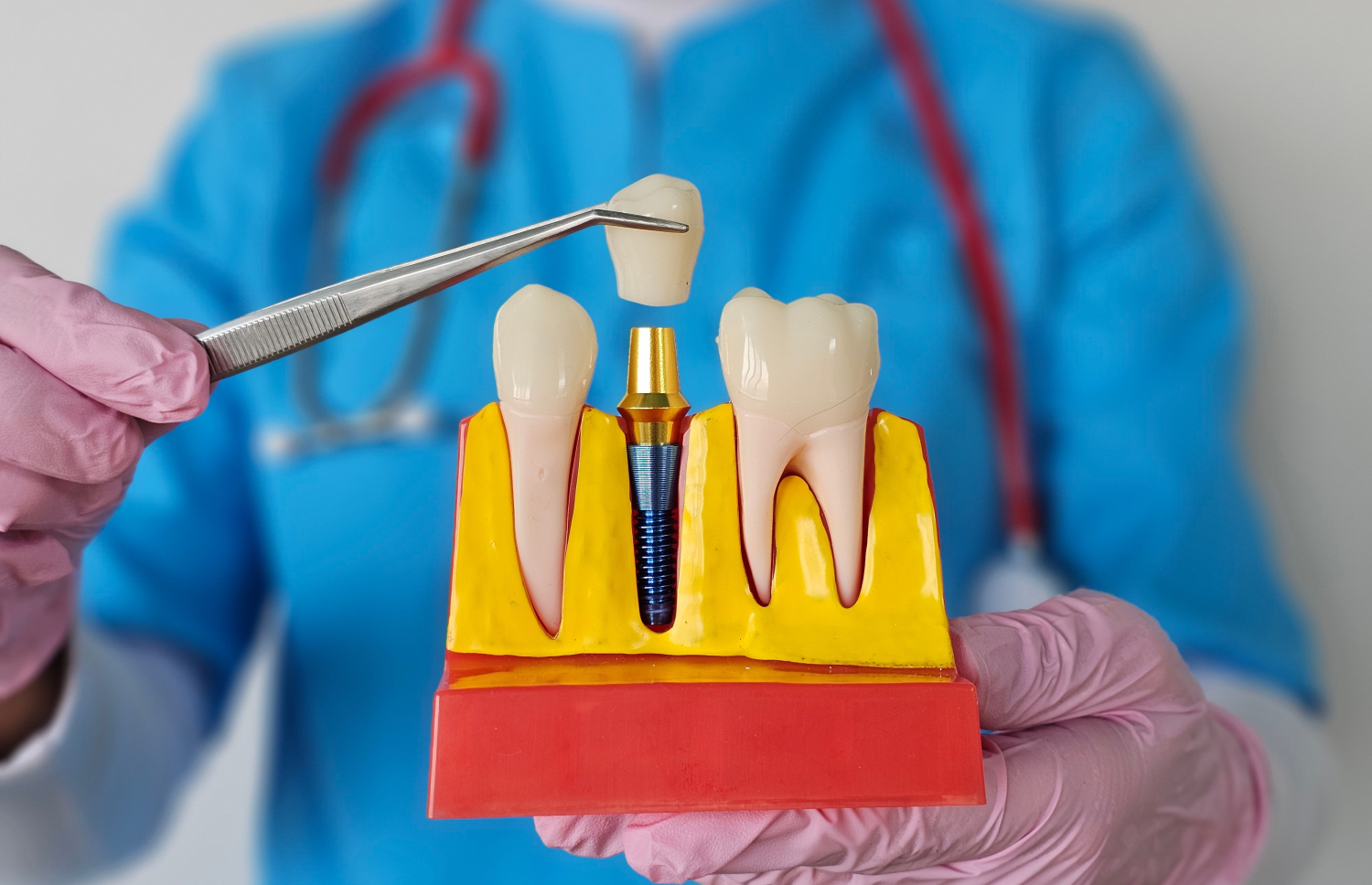
An artificial root for a natural-looking smile
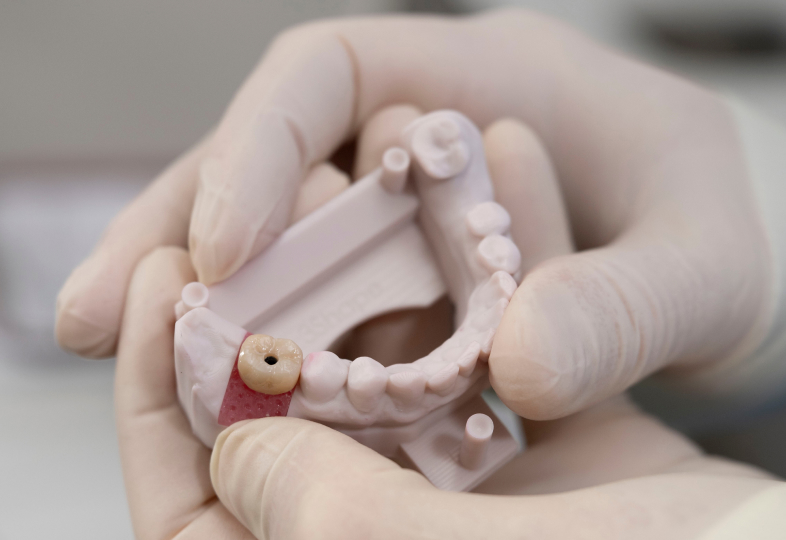
A dental implant is an artificial titanium root that permanently replaces a missing tooth. Surgically inserted into the jawbone, it serves as a stable foundation to support a crown, bridge, or full denture. Unlike removable solutions, the implant fuses with your natural bone (osseointegration) to become a permanent part of your mouth.
How Is the Procedure Performed?
Dental implant placement is a minor surgical procedure carried out in several stages over a few months:
- Consultation and Planning:
Comprehensive examination and review of your medical history
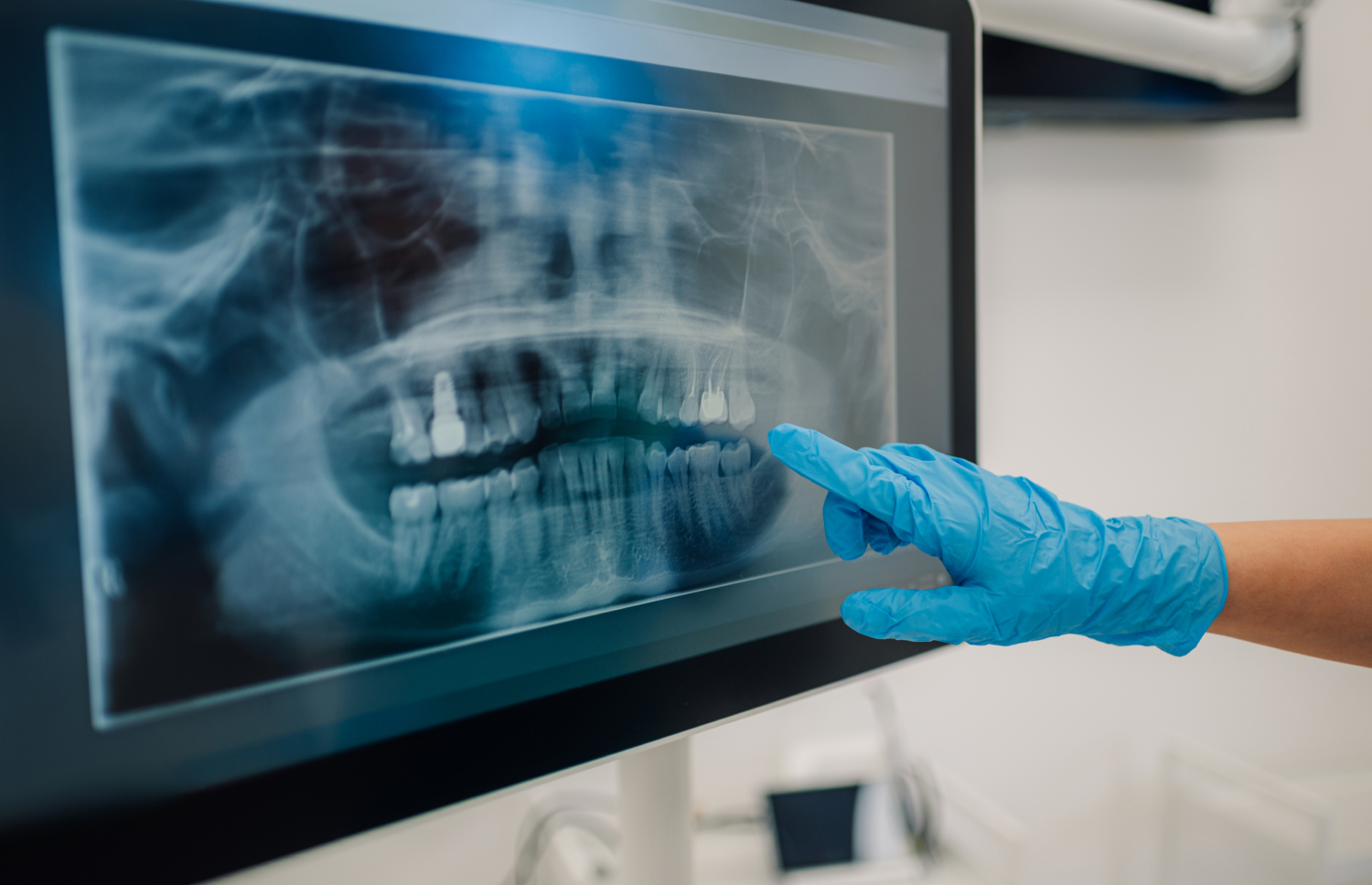
Panoramic X-rays and 3D scans to assess bone quality and quantity, nerve and sinus positions, and plan the optimal implant placement - Guided Surgery:
Custom 3D-printed surgical guide ensures precise, micrometer-level positioning of the implant - Implant Placement:
Under local anesthesia, the titanium screw is inserted into the jawbone beneath the gum
A healing abutment or cover screw is placed - Osseointegration Period:
Healing period of 3 to 6 months during which the implant fuses with the bone
Temporary prosthesis can be worn during this time - Abutment Placement:
Once integrated, a connector (abutment) is attached, protruding from the gum - Crown Fabrication and Placement:
Digital impression is taken, and a custom crown is created to be screwed or cemented onto the abutment - Regular Follow-Up:
The health of the implant and surrounding tissues is monitored during routine check-ups
Why choose our clinic?
Advanced technology and personalized care
Placing dental implants requires surgical precision and meticulous planning. Our dentists, trained in implantology, use 3D technology to plan and execute your procedures with accuracy.
-
High-quality implants
-
3D imaging and CBCT scans
-
Computer-guided surgery
-
Minimally invasive techniques
-
Sedation options
-
Bone grafting (if needed)
Dental implant recommendations
How to prepare for a successful surgery
Before the surgery
- Although dental implant surgery is performed under local anesthesia and you may be able to drive afterward, we recommend having someone accompany you.
- If any prescribed medication causes drowsiness, it is essential to have an adult accompany you and drive you home.
- Report any changes in your health condition.
- Pick up any prescribed medications from the pharmacy beforehand.
The day of the surgery
- Eat a good meal about 2 hours before the procedure; you do not need to fast. Avoid alcohol and energy drinks.
- Wear loose and comfortable clothing.
- Take any medications prescribed by your dentist as directed.
- Arrive on time to help reduce stress.
Post-operative instructions
The day of surgery and the first 24 hours
- Rest and avoid any strenuous physical activity.
- Keep your head slightly elevated while sleeping.
- Do not smoke. Nicotine can interfere with healing.
- Take your prescribed medications as directed by your dentist.
- Do not touch the treated area with your fingers or tongue.
- Avoid vigorous spitting.
- It is normal for saliva to be slightly tinged with blood for 12–24 hours.
- Do not rinse your mouth during the first 24 hours.
- Apply a cold pack wrapped in a damp towel to your cheek for at least 20 minutes every hour.
- Stick to a soft, lukewarm, or cold diet. Avoid hot, spicy, hard, crunchy, or acidic foods. Drink plenty of water, but do not use a straw.
- Some discomfort is normal. Your medications will help manage the pain.
The following days
- Begin gently rinsing your mouth 2 to 3 times a day with the chlorhexidine mouthwash prescribed by your dentist.
- Swelling may appear 48 to 72 hours after surgery and will gradually subside.
- Bruising is possible and normal. No medical intervention is needed.
- After 2 weeks, we will monitor your recovery process and remove any sutures
Frequently asked questions
Frequently asked questions about dental implants
Can I brush my teeth normally with a dental implant?
Since the implant fuses with the jawbone, it can be cared for it much like a natural tooth. We recommend flossing at least once a day. Your dental hygienist will guide you on how to gently clean around the implant and gum junction. Together, you’ll choose the best tools for your needs, such as a toothbrush with longer tip bristles to reach the back of the implant easily.
Are dental implants suitable for everyone?
Dental implants are suitable for individuals in good overall health with healthy gums. Your jawbone must have enough density and volume to support the implant. Your dentist will perform a complete evaluation before the procedure to determine if dental implants are right for you.
Certain medical conditions and some medications may be contraindications for dental implants. Additionally, smoking significantly increases the risk of implant failure, so you should be a non-smoker or quit smoking prior to the procedure.
What If my jawbone is insufficient?
A bone graft may be performed before or during implant placement. This procedure rebuilds and strengthens the bone to create a solid foundation. Typically, after a few months of healing, the implant can be safely placed.
Will dental implants last a lifetime?
With proper care and good oral hygiene, dental implants can last 25 to 30 years or longer. The titanium screw itself becomes a permanent part of your jawbone. However, the crown attached to the implant may need to be replaced after 10 to 15 years due to normal wear, just like any other dental restoration.
Is there an age limit for dental implants?
No, there is no maximum age for receiving dental implants. What matters most is your overall health, the condition of your gums, and the density and volume of your jawbone. During your consultation, we will assess your situation to determine if implants are suitable for you, regardless of your age.
Book an appointment
Regain the smile you deserve
Choose a permanent, natural, and long-lasting solution. Our team will guide you every step of the way. Schedule a consultation to find out if dental implants are the right solution for you.