
Wisdom tooth extraction
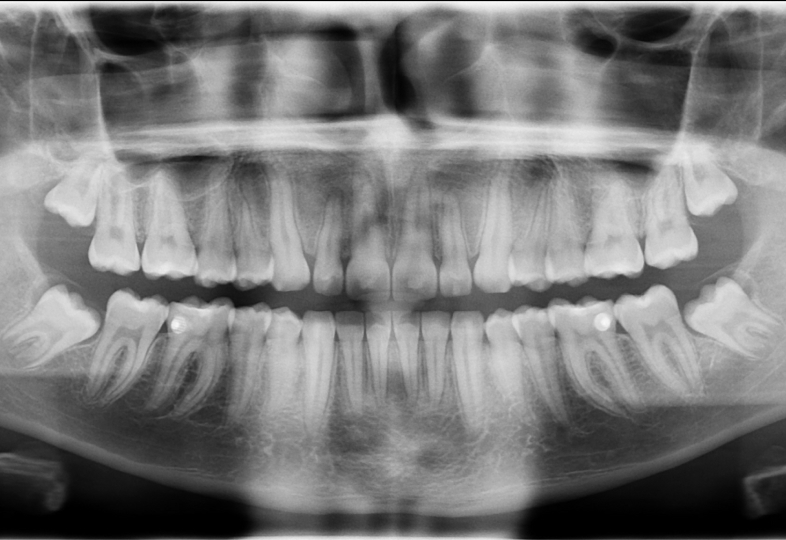
Wisdom tooth extraction is a common procedure that can help prevent future complications. We perform this surgery using digital X-rays, sometimes complemented by a 3D scan, to ensure your comfort and promote a quick recovery.

Why remove wisdom teeth?
A preventive approach for your oral health
Wisdom teeth, also known as third molars, are located at the back of the dental arch. They usually emerge between the ages of 17 and 25. Most people have four, but it is not uncommon to have fewer, or even none.
Extraction is often recommended as a preventive measure when there is insufficient space in the mouth. If your jaw is too small to accommodate these teeth, they may remain impacted or partially erupted, which can lead to various complications such as cavities or infections.
By detecting problematic wisdom teeth early through panoramic X-rays or a 3D scan, we can plan their removal before any painful symptoms or complications arise. The procedure is generally simpler and recovery is faster in young adults, when the roots are not yet fully formed.
Why choose our clinic
Expertise, technology, and personalized care
Wisdom teeth extraction may seem intimidating, but we do everything possible to ensure your experience is comfortable and safe. The procedure can be performed under local anesthesia (with or without sedation, depending on your needs).
-
Precise evaluation (panoramic X-rays or 3D imaging)
-
Minimally invasive techniques
-
Pain management
-
Experienced team
-
Reassuring environment
-
Careful follow-up
Post-operative instructions
For a quick and complication-free recovery
The first 24 hours
- Do not brush the extraction sites during the first 24 hours.
- Avoid spitting, vigorous rinsing, or using a straw, as this may dislodge the blood clot forming in the socket.
- To reduce swelling and discomfort, apply ice to the cheek for 10–15 minutes every hour during the first 48 hours.
- To manage pain, take prescribed or recommended pain medication as directed.
- Rest and avoid any strenuous physical activity for 48 to 72 hours.
- Keep your head elevated, even while sleeping, to help reduce swelling.
For one to two weeks
- Stick to soft, lukewarm, or cold foods.
- Avoid hot, spicy, hard, crunchy, or sticky foods.
- Do not drink through a straw.
- Do not spit.
- Do not rinse vigorously.
- Avoid alcohol.
- Do not smoke.
- After 24 hours, gently brush your other teeth.
- Starting on the third day, gently rinse your mouth or the surgical sites with clean water or a saline solution (as directed by your dentist).
Signs to watch for and follow-up care
Swelling typically peaks 48 to 72 hours after the procedure, then gradually decreases. Mild discomfort, limited ability to fully open the mouth, and bruising on the cheek are normal.
Contact us immediately if you experience:
- Heavy bleeding that does not stop with gentle pressure
- Severe pain (even with prescribed pain medication)
- Fever above 38.5°C (101°F)
- Swelling that worsens after 3 days
- Difficulty swallowing or breathing
- Pus or unusual discharge
- Sudden, severe pain 3 to 4 days after the extraction
Frequently asked questions (FAQ)
Frequently asked questions about wisdom teeth
Is wisdom tooth extraction painful?
The procedure itself is not painful thanks to local anesthesia, which completely numbs the area. You may feel pressure during the extraction, but no pain.
After the procedure, once the anesthesia wears off, some discomfort is normal and varies from person to person.
Most patients manage pain well with prescribed pain relievers (ibuprofen, acetaminophen, or stronger medication if needed). Discomfort is usually more noticeable during the first few days, then gradually decreases.
Following post-operative instructions carefully significantly reduces pain and helps speed up healing.
How long does it take to heal?
Complete healing of the soft tissues takes about 1 to 2 weeks. The bone socket continues to fill in and heal over several months.
Most people are able to return to their normal activities after 3 to 5 days, although some residual sensitivity may remain.
Can all four wisdom teeth be removed at the same time?
Yes, it is common to remove all four wisdom teeth in a single procedure, especially if they are all problematic or at risk.
Book an appointment
A simple procedure to prevent future problems
Whether your wisdom teeth are causing discomfort or not, don’t wait. Consult our team to find out if preventive extraction is recommended. We will assess your situation, answer your questions, and guide you throughout the entire process.